Who Decides What Makes a Boat Safe?
The marine industry has a problem that rarely makes headlines: federal boating regulations move slowly, but boats evolve fast. From bigger outboards to new electric platforms, the safety questions change every season. That’s why organizations like the American Boat and Yacht Council (ABYC) matter. ABYC is a nonprofit that helps the industry regulate itself through consensus-based boating safety standards, so we are not stuck waiting on Congress to modernize rules. The payoff for builders, technicians, and boat owners is practical guidance that keeps small craft safer, more reliable, and easier to service across the entire recreational boating ecosystem.
A key theme is how ABYC and the National Marine Manufacturers Association (NMMA) work together. ABYC focuses on developing ANSI-accredited standards through committees, while NMMA applies those standards through manufacturer certification programs. That division of labor creates real “harmonized” outcomes: the same safety expectations show up in design, production, and compliance. It also creates a shared language for conversations with the Coast Guard and other agencies when a technology does not fit outdated frameworks. When standards and certification align, a buyer walking a boat show sees more than a logo; they see a system designed to prevent fires, flooding, and avoidable failures.
Workforce development sits right beside standards. Marine service technicians keep boats safe after the sale, yet their work is often invisible until something breaks. ABYC’s International Marine Service Technician Week and technician awards highlight the training culture that makes the industry safer day to day. The episode underscores a practical point: high-quality standards only work if people can learn them, teach them, and use them on real boats. Recognizing technicians, expanding training, and widening awareness of ABYC membership benefits all feed the same goal: fewer accidents and more confident boaters, including first-time owners who may not have grown up on the water.
The behind-the-scenes funding story is just as important. ABYC’s standards development is supported in part by the Sport Fish Restoration Trust Fund, a “user pay, user benefit” model built on small excise taxes that flow back into boating and fishing programs. Compared with the cost of federal rulemaking, grants that support faster standards updates can be a huge public benefit. The conversation also tackles what’s next: e-foils, autonomous docking, advanced driver assistance systems, and AI that can interpret camera inputs. These tools can reduce operator inattention, but they raise hard questions about responsibility and command. The clearest takeaway is also a call to action: if you build, service, design, or sell boats, raise your hand and get involved in ABYC committees so safety keeps pace with innovation.
Host & Author:
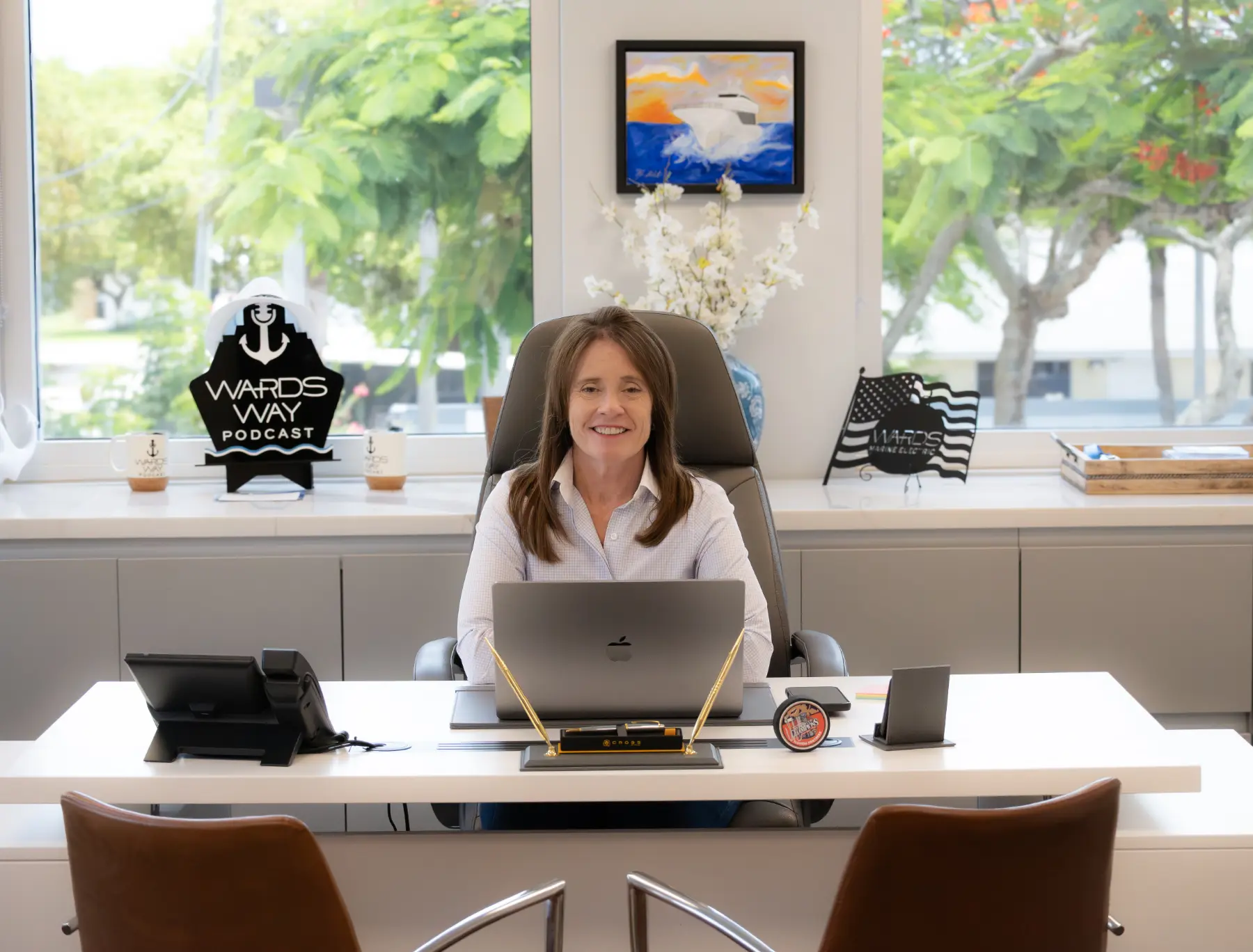
Wards Marine Electric
Kristina Hebert is President and CEO of Wards Marine Electric, a third-generation family business founded in 1950 and globally recognized for its marine electrical expertise. Having grown up in the industry under the leadership of her grandfather and father, she joined the company in 1996 and later served as Chief Operating Officer for more than two decades before becoming CEO. With a bachelor’s degree in political science from the University of South Florida, Kristina combines her legislative background with decades of operational and technical sales experience. She is also a two-term past president of the Marine Industries Association of South Florida and a current ABYC board member. Today, she leads Wards Marine Electric’s continued growth and hosts The Wards Way podcast, featuring prominent industry leaders and policymakers at major boat shows, boating tournaments, the American Boating Congress, and the ICOMIA/IFBSO Congress.