Can We Protect the Environment Without Killing Innovation?
The recreational boating industry is facing a regulatory moment that could reshape how fiberglass boats are built in the United States. One of the biggest flashpoints is styrene, a key ingredient in unsaturated polyester resin used to manufacture most fiberglass recreational boats. Styrene has decades of research behind it and has been used in boatbuilding since the 1950s, alongside layers of oversight that include EPA Title V air permits, state permitting, and OSHA workplace exposure limits. The concern is not whether safety and environmental rules matter, but whether regulators will treat every use of a chemical as identical, even when the real-world exposure, product lifespan, and controls are completely different for a long-lived boat than for disposable plastics.
That tension shows up in how TSCA, the Toxic Substances Control Act, evaluates chemicals. When TSCA reviews a substance “as a whole,” a conservative assessment can ignore sector-specific controls and responsible manufacturing practices. For marine manufacturing, that is a serious risk: a blanket restriction or ban on styrene would threaten US boatbuilders, push jobs offshore, and force unproven material changes that may look fine in year one but are hard to validate over 30 to 50 years of saltwater, freshwater, heat, cold, and structural stress. A key path forward is a TSCA framework that allows use case analysis, letting EPA evaluate risk with context: closed molding versus open processes, ventilation and airflow requirements, worker protections, and the reality that boats are durable goods built for generations.
PFAS regulations add another layer of complexity, especially when states move faster than federal policy. PFAS, a large family of fluorinated chemicals used for heat resistance and durability in items like O-rings, gaskets, and seals, is being regulated through a patchwork of state rules. The most disruptive example discussed is Minnesota’s approach, which requires reporting essentially every component of every product into the PRISM database, with details like chemical identity and concentration, and makes much of that information publicly searchable. For small and mid-sized boatbuilders who assemble thousands of parts sourced from broad supply chains, this creates an almost impossible compliance burden and raises concerns about proprietary data, misuse, and unintended consequences, while treating thousands of PFAS chemistries as if they carry the same risk profile.
Against that backdrop, the industry is also trying to lead on climate and emissions in a way that matches how boats are actually used. Policymakers sometimes default to technology mandates, assuming what works for cars should work for boats, but boating use cases differ: many boats sit idle much of the year, and moving a hull through water requires far more energy than rolling a car down the road. A data-driven decarbonization study across multiple boat types finds there is no single solution, and points to strategic maritime fuels as the fastest lever for meaningful fleet-wide emissions reductions. The promise is immediate impact across millions of existing boats if clean fuels reach marinas, but the bottleneck is logistics and scale, getting niche quantities from production sites to small marinas without adding prohibitive cost. The takeaway for boaters and builders is clear: advocate for pragmatic, harmonized rules, push for use case based chemical policy, and support fuel and infrastructure pathways that deliver real environmental gains without sacrificing safety or American manufacturing.
Host & Author:
Wards Marine Electric
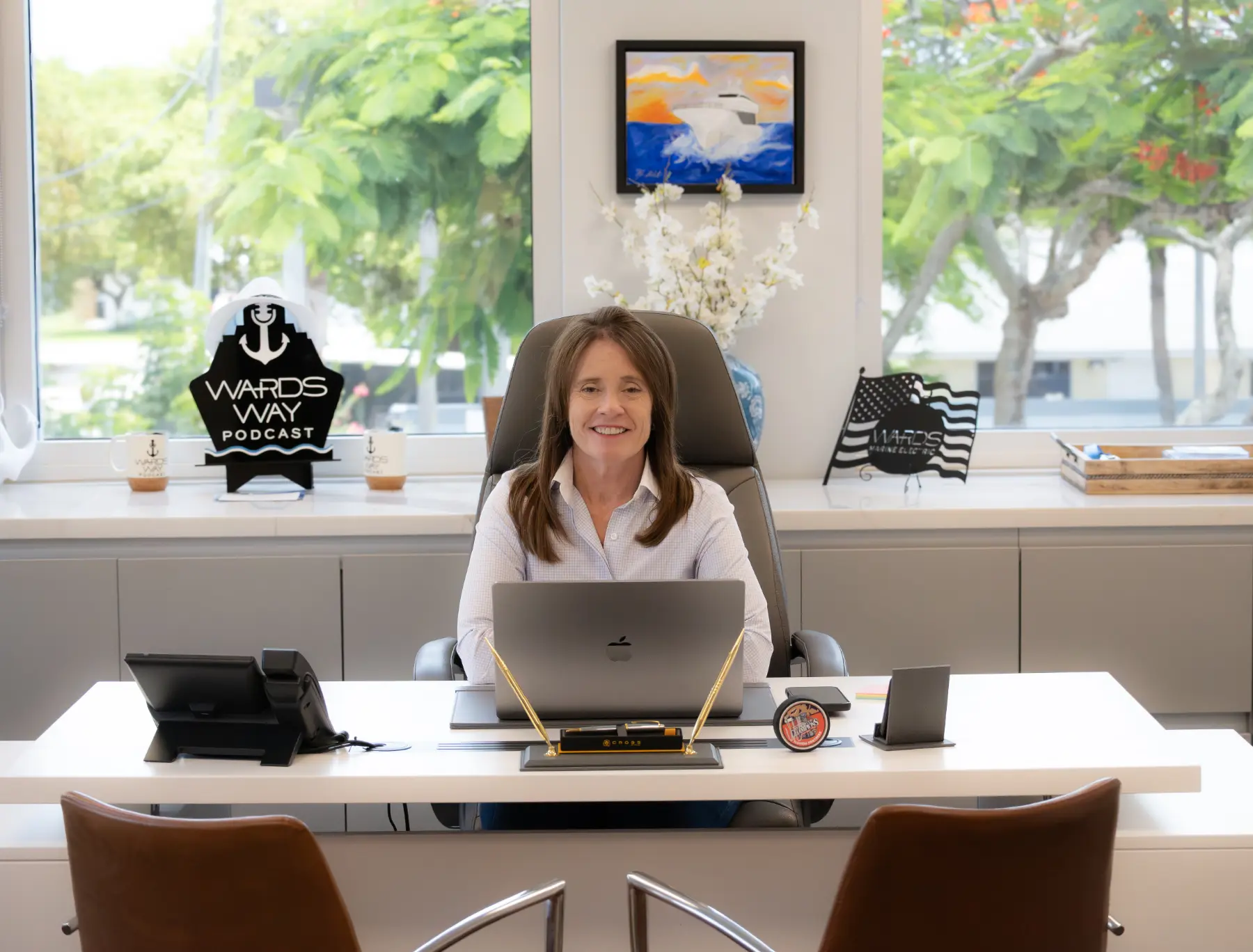
Kristina Hebert is President and CEO of Wards Marine Electric, a third-generation family business founded in 1950 and globally recognized for its marine electrical expertise. Having grown up in the industry under the leadership of her grandfather and father, she joined the company in 1996 and later served as Chief Operating Officer for more than two decades before becoming CEO. With a bachelor’s degree in political science from the University of South Florida, Kristina combines her legislative background with decades of operational and technical sales experience. She is also a two-term past president of the Marine Industries Association of South Florida and a current ABYC board member. Today, she leads Wards Marine Electric’s continued growth and hosts The Wards Way podcast, featuring prominent industry leaders and policymakers at major boat shows, boating tournaments, the American Boating Congress, and the ICOMIA/IFBSO Congress.