Advocacy, Access, & the Boating Industry
Federal advocacy can feel distant until you see how directly it shapes a Saturday on the water, a factory’s hiring plan, or whether a boat ramp gets repaired. From the American Boating Congress in Washington, DC, we talk with Clay Crabtree of the National Marine Manufacturers Association about how the recreational boating industry builds year-round relationships with Congress. The key idea is simple: lawmakers and staff cannot account for real-world impacts if constituents never show up. When local boat builders, engine makers, and marine businesses speak for themselves, policy gets clearer, less partisan, and more grounded in jobs, access, and safety.
A major focus is the Sportfish Restoration and Boating Trust Fund reauthorization, a rare public-private partnership that has funded boating infrastructure and conservation since 1950. Boaters and anglers essentially told the federal government, “Tax us,” creating excise taxes on gear and, most importantly today, motorboat fuel. That user-funded model now generates close to $800 million annually and supports state fish and wildlife agencies, habitat restoration, access projects, and Coast Guard boating safety programs. With pieces expiring on September 30, the priority is keeping this backbone intact through bipartisan bills in the House and Senate, and helping members tell state-by-state stories that make the benefit real.
Access is not just about money, it is also about how agencies are allowed to use it. We dig into the Water Resources Development Act and why the Army Corps of Engineers matters to recreational boating. Unlike agencies such as the National Park Service, the Army Corps cannot reliably retain recreation fees to reinvest them at the same boat ramps and facilities where boaters pay. The practical fix NMMA is pushing is modernization: let the Corps keep those user fees and put them back into parking, ramps, and maintenance so access improves without inventing a new funding stream. It is a policy lever that sounds technical but lands in very visible ways for families, marinas, and local waterfront economies.
Trade policy is another thread, especially the renewal of the US-Mexico-Canada Agreement. The conversation highlights a core business need: certainty. Canada is the top export market for recreational boating, accounting for roughly 40% of US exports in the sector, with hundreds of millions of dollars flowing in boats and engines across North America. The push is to renew and enforce USMCA rather than reopen it, while also acknowledging how tariffs and shifting rules disrupt planning. Even with 95% of boats sold in the US made domestically, manufacturers still rely on global supply chains, which means sudden tariff changes can hit costs, timelines, and customers fast.
Finally, we get into unintended consequences: E15 fuel proposals and marine engine warranties, plus NOAA’s North Atlantic right whale vessel speed rule expansion that would have imposed broad 10-knot limits for many vessels across huge stretches of the Atlantic. NMMA and partners helped generate data-driven opposition and contributed to the rule being withdrawn, a rare outcome that shows why participation matters. The longer-term goal is better solutions, including technology and updated science, alongside clear labeling and public education so well-meaning policy does not accidentally harm a $230 billion recreational boating industry and the communities that depend on it.
Host & Author:
Wards Marine Electric
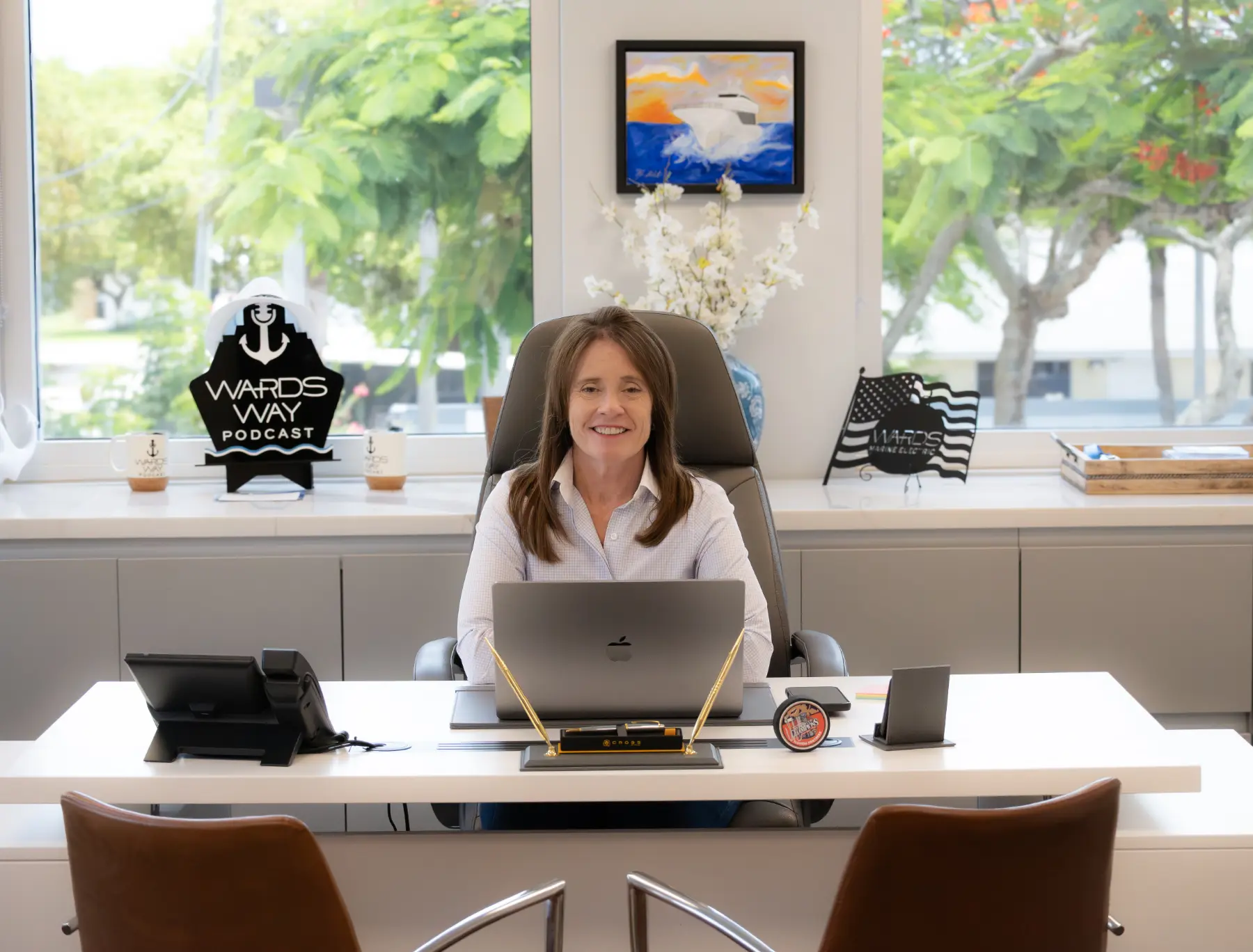
Kristina Hebert is President and CEO of Wards Marine Electric, a third-generation family business founded in 1950 and globally recognized for its marine electrical expertise. Having grown up in the industry under the leadership of her grandfather and father, she joined the company in 1996 and later served as Chief Operating Officer for more than two decades before becoming CEO. With a bachelor’s degree in political science from the University of South Florida, Kristina combines her legislative background with decades of operational and technical sales experience. She is also a two-term past president of the Marine Industries Association of South Florida and a current ABYC board member. Today, she leads Wards Marine Electric’s continued growth and hosts The Wards Way podcast, featuring prominent industry leaders and policymakers at major boat shows, boating tournaments, the American Boating Congress, and the ICOMIA/IFBSO Congress.
Guest Speaker: