%402x.svg)

Pumps, Resilience, And The Boat Show: Season 5 Episode 8
https://www.buzzsprout.com/2270245/episodes/18219182
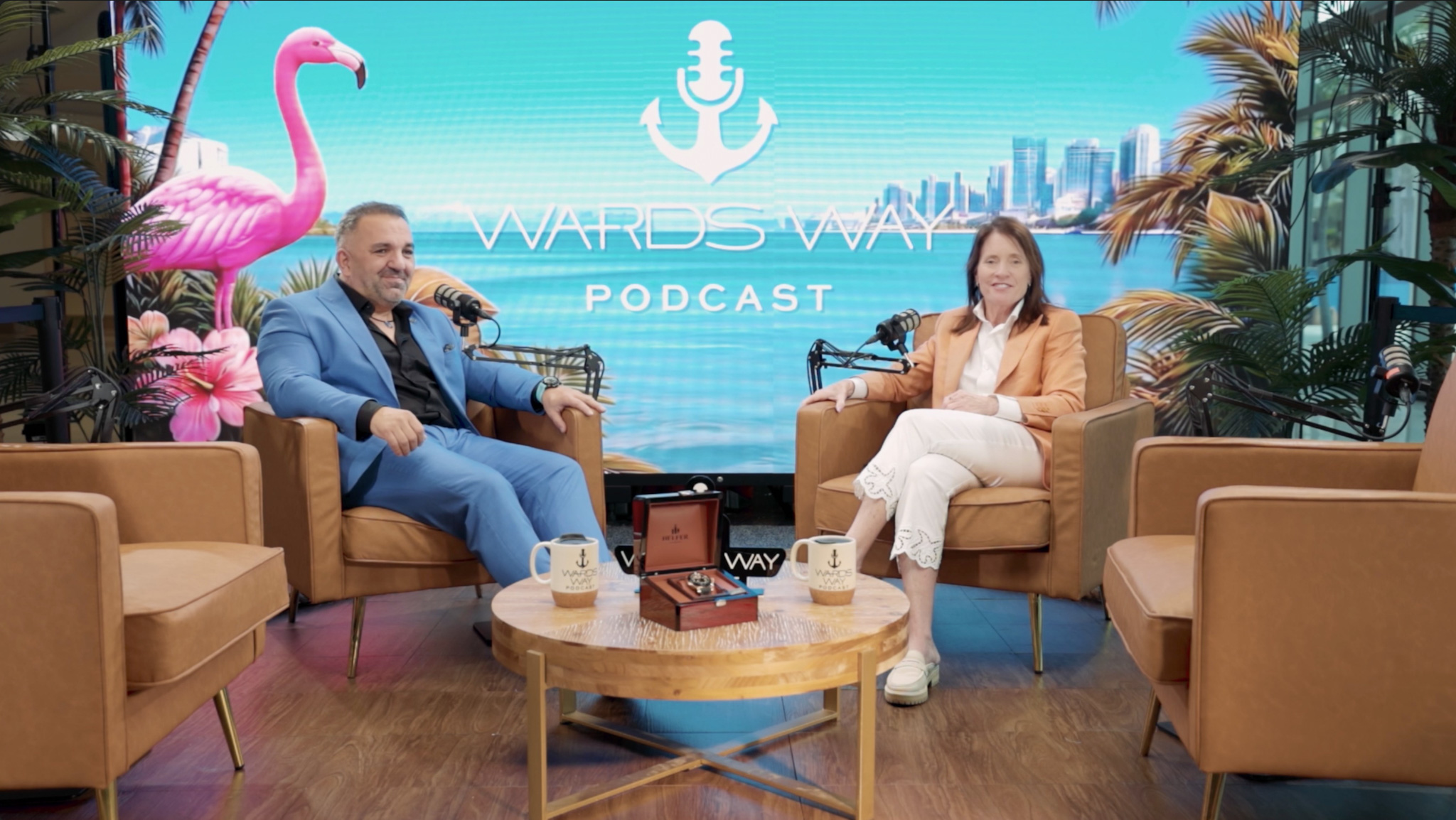
Marine businesses thrive by adapting together. From shifting administrations to market shocks like the luxury tax and credit collapse, resilience is the throughline. That backdrop sets the stage at the Fort Lauderdale International Boat Show, where relationships, not just displays, move the industry forward. Against the hum of the docks and the energy of buyers braving rain and crowds, the show becomes more than a spectacle; it is the clearinghouse for real deals, real fixes, and real partnerships. In this setting, host Kristina Hebert meets with Hooker Pump's president and founder, Trista Evans. Together, they dissect the company that decided a “good enough” livewell pump wasn’t good enough at all.
Hooker Pumps centers its value on a patented, serviceable livewell pump and a redesigned system architecture. Instead of the legacy one-well-one-pump approach that strands anglers when a motor fails, Hooker routes multiple pumps into a manifold with valves. The result is instant redundancy: close one valve, open another, keep water flowing, keep bait alive. Their sea chest mounts pumps on the outside of the box to simplify access and speed swaps. A patented variable-flow feature, controlled by a simple rheostat, lets captains dial in precise water delivery for different bait species, temperatures, and run conditions. It’s an elegant fusion of mechanical reliability and practical control where uptime is the metric that matters.
Adoption validates the idea. Roughly 50 boat builders work with the brand, and around 30 carry the system as standard. Names span from Bahala to Chaparral, proving the concept works across sizes and missions. This is not just a parts swap; it’s a reframed plumbing strategy. Because the manifold spreads risk and the pumps are engineered to be serviced and returned, owners aren’t trapped in a two- to three-year replacement cycle. The team backs this with an in-house service program supported by a network of installers who can pull hardware dockside, plus a rush turnaround measured in hours.
Service is a strategy, not a department. Hooker’s “pump pinch” program underscores that point: if a tournament angler is down, they hand over a new pump immediately and take the old unit in. That level of responsiveness isn’t a gimmick; it’s how you win trust in a market where a dead well can kill a charter day. Technology augments the package rather than complicating it. Integration with popular marine electronics and touchscreen interfaces offers monitoring and control without locking users into a proprietary box. The system fits the cockpit reality captains live with: clear controls, instant feedback, no drama.
The show conversation widens to the business of boat shows themselves. Fort Lauderdale matters because it brings builders, suppliers, and service firms together in one place, where a handshake can clear a backlog faster than a week of emails. Beyond sales, shows refresh the fabric of a local economy and accelerate problem-solving across brands. That local gravity can make international expansion a hard choice when the world’s largest boat show sits in your backyard. Still, the team keeps an eye on opportunity, weighing where the system’s strengths could map to new regions and regulations.
Talk of the future takes two tracks: expand use cases within marine and export the engineering to adjacent sectors. On boats, redundancy naturally extends to air-conditioning systems, circulation, and emergency pumps. The emergency angle turns bold with a proposed partnership for crash pumps that move 10,000 gallons per hour, potentially doubling common de-watering rates on rescues. That capability reframes response time and could change outcomes when a hull is compromised. It’s a practical innovation with a straightforward mission: buy time, save gear, protect lives.
The leap beyond marine is already happening. Agriculture emerged from a simple request: make drip line irrigation more reliable. Hooker adapted its know-how to design transfer pumps, agitation pumps to blend chemicals in totes, and irrigation solutions built for uptime. The physics are familiar—fluid dynamics, durability, serviceability—while the stakes are just as real: crops, schedules, and safety. That crossover echoes to the Wards Marine Electric, which started in agricultural generator work before channeling those skills into boating.
The throughline across markets is a disciplined approach: build serviceable hardware, prioritize redundancy, and respect the end user’s day on the line. Whether it’s a captain protecting bait, a crew keeping cabins cool, a farmer safeguarding a harvest, or a tow operator fighting rising water, the same principles apply. Reliability is not an afterthought; it is the product. At the dock, in the field, or alongside a listing hull, that mindset turns a pump from a commodity into a system that keeps people working, playing, and adventuring.
This blog post provides a detailed overview of Season 5, Episode 8 of the Wards Way podcast. For a comprehensive listening experience, please search for Wards Way across your preferred streaming platforms.
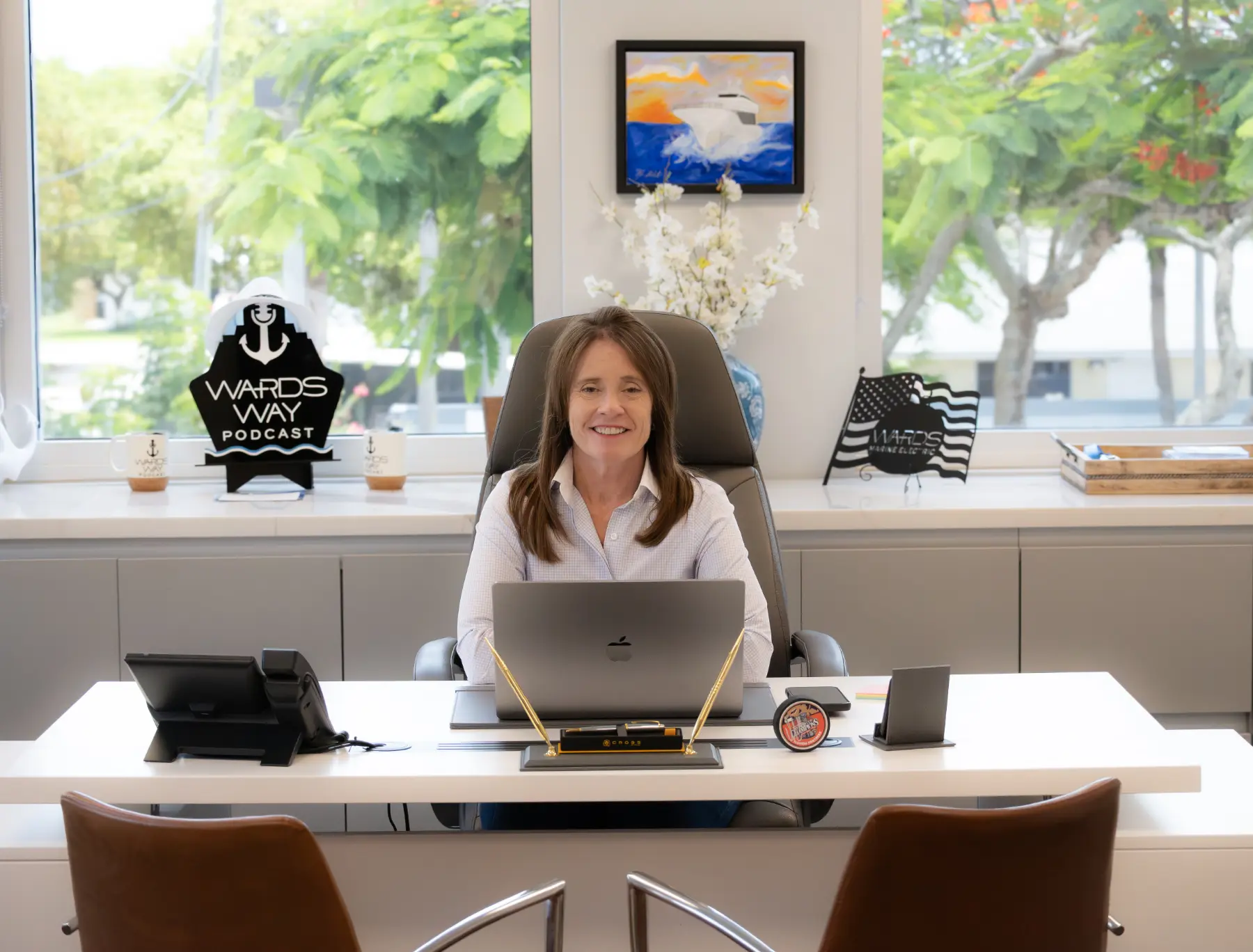
Host & Author:
Wards Marine Electric
Kristina Hebert is President and CEO of Wards Marine Electric, a third-generation family business founded in 1950 and globally recognized for its marine electrical expertise. Having grown up in the industry under the leadership of her grandfather and father, she joined the company in 1996 and later served as Chief Operating Officer for more than two decades before becoming CEO. With a bachelor’s degree in political science from the University of South Florida, Kristina combines her legislative background with decades of operational and technical sales experience. She is also a two-term past president of the Marine Industries Association of South Florida and a current ABYC board member. Today, she leads Wards Marine Electric’s continued growth and hosts The Wards Way podcast, featuring prominent industry leaders and policymakers at major boat shows, boating tournaments, the American Boating Congress, and the ICOMIA/IFBSO Congress.