%402x.svg)

From Boat Sales To Superyachts: How MarineMax Powers A Global Lifestyle
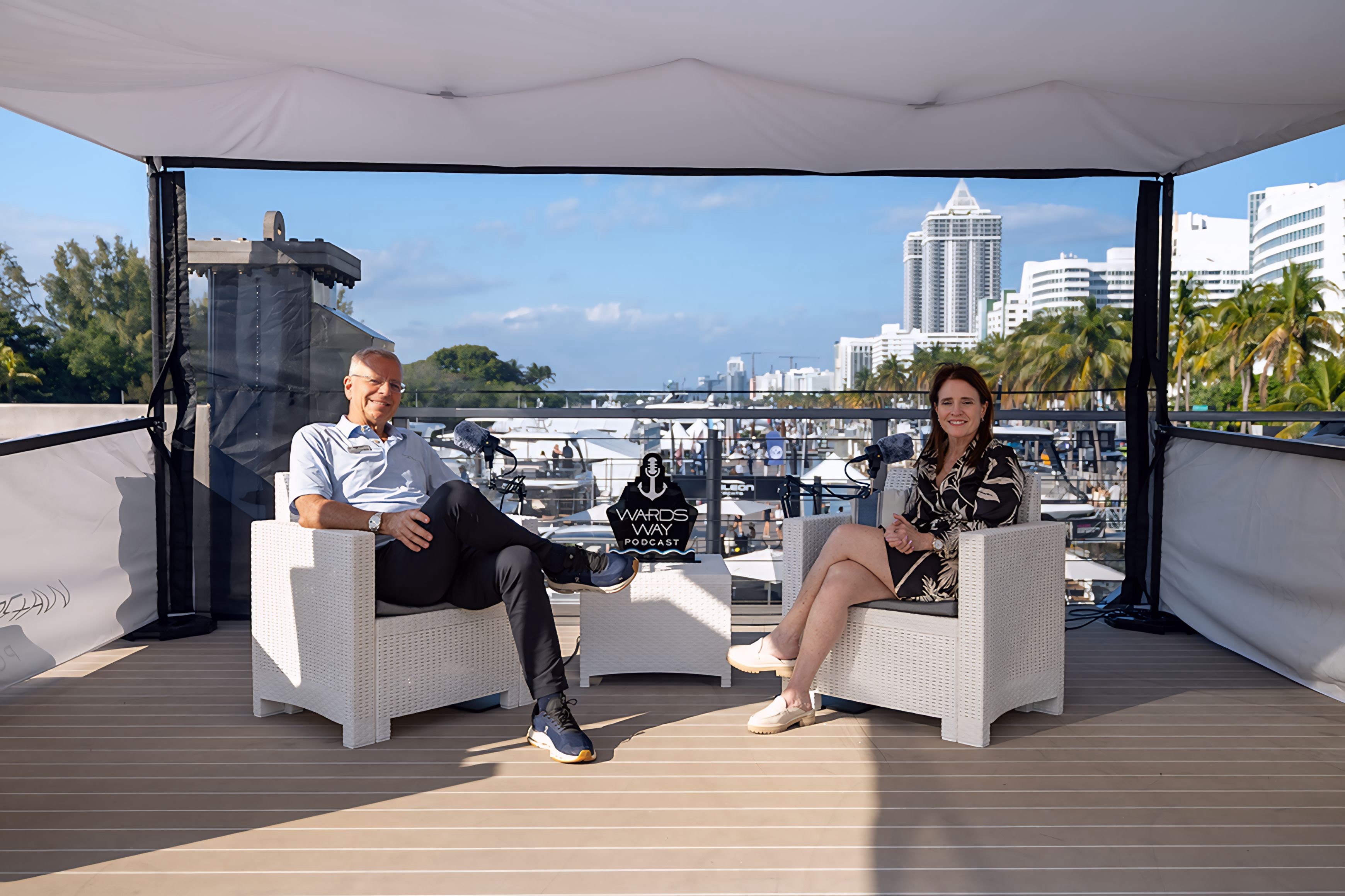
Host Kristina Hebert sits down with MarineMax’s SVG Chuck Cashman in Season 6, Episode 2 of the Wards Way podcast. They explore how Miami’s sunlit lifestyle is more than a postcard; it’s an engine room of people, products, and decisions that keep a global boating culture moving. At the Miami International Boat Show, MarineMax’s presence spotlights how a modern marine company spans far beyond sales. Six displays at the yacht collection and ten more in the convention center hint at a broader truth: the business is an ecosystem. MarineMax blends retail, deep service infrastructure, marina ownership, finance, technology, and superyacht management into one customer journey. That stack isn’t vanity. It is how boaters get on the water, stay there, and feel supported when conditions change.
Service is the quiet giant. For every salesperson, MarineMax fields two service pros, backed by over a hundred vans and dozens of travel lifts. The glamour of delivery days masks a relentless routine of maintenance, storage, and logistics. When access to slips tightens, marina ownership becomes not just a hedge against cycles but a promise of continuity for clients. Through IGY, one of the largest marina networks worldwide, the company connects destinations and solves real constraints. Add finance options through New Coast and a growing tech arm, and you get a flywheel: sales feed service, service feeds loyalty, loyalty feeds upgrades and charter, and data strings it all together. It’s a model designed to guide a boater from entry-level craft to a managed superyacht.
Yet the path isn’t linear. Families enter with a small boat, pause during life changes, then reenter through charter or a different size class. Many buyers leapfrog straight into larger models. That fluidity shifts how brands serve needs: flexible storage, charter access in Europe or the Caribbean, and yacht management that protects time. MarineMax learned the superyacht business by listening first, partnering with specialists, and layering on public-company rigor where it adds value. The goal isn’t to trap a client in a segment; it’s to prevent them from outgrowing the relationship. When a 30- to 35-meter owner hugs the team and lists elsewhere, that’s a signal to expand capabilities, not concede ground.
Policy ripples through everything. Tariffs don’t feel like abstractions when an $800,000 boat prices like a million. Buyers seek value and resist taxes, even with offshore registrations and cruising permits as legal workarounds. National pride and optics often override spreadsheets, leading to delayed decisions. Ironically, tariffs can buoy domestic builders like Cruisers Yachts and Intrepid, but supply chains stay global: European engines and screens from Asia reintroduce costs through the back door. Meanwhile, charter taxes in the Bahamas pushed fleets toward the Caribbean, stressing infrastructure and shifting MarineMax’s focus. Smart legislation matters: Florida’s sales tax cap increased state revenue by keeping boats local, proving that incentives can grow the pie.
The industry’s economic footprint is stubbornly human. Big boats fund big payrolls, with wages well above state averages. AI won’t wax a hull, rebuild a diesel, or chase an electrical gremlin in a tight engine room. Each dawn at a show reveals hundreds of workers washing, chamoising, and prepping. Technicians, fiberglass pros, painters, electricians, and systems specialists hold careers that don’t require four-year degrees or crushing debt. Apprentice programs carry batteries before laptops; the yard is a gym and a classroom. Retention is a grind: hire 20, lose 10 to retirement, and a few to other fields. But the solution isn’t to shrink; it’s to recruit smarter, train faster, map alternative career paths, and celebrate skilled trades as a first choice.
Strategy cycles with the market. When acquisition multiples don’t make sense, the best move is inward: streamline operations, deepen training, tighten service response, refine tech tools, and enhance marina experiences. Competition is welcome when it lifts standards; the real loss is a customer who leaves boating due to poor care. Florida’s density of marine services, especially around Fort Lauderdale, acts like a global control tower, exporting expertise to yards in Europe and beyond. Open an engine room in Holland or France, and you’ll spot a web of parts and brands born in South Florida’s small-business backbone. That’s the invisible scaffolding behind a glossy lifestyle: a network of craftspeople, resilient companies, and policy choices that either ease the wake or churn it. The future favors those who listen, learn fast, and keep people on the water with less friction and more joy.
We hope you’ll listen to the entire episode by searching Wards Way on your favorite platform. Don’t forget to like, comment, and subscribe.
Host & Author:
Wards Marine Electric
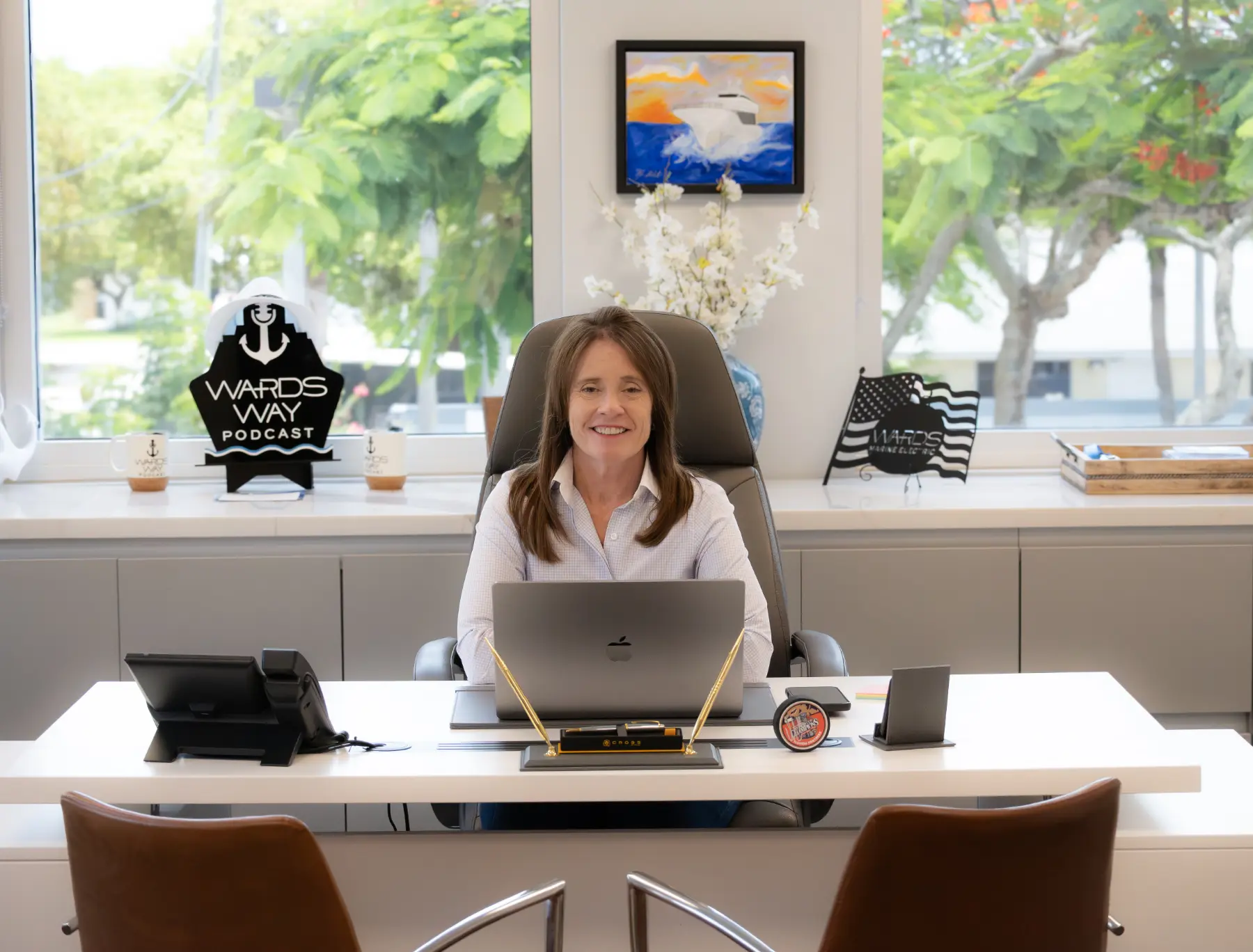
Kristina Hebert is President and CEO of Wards Marine Electric, a third-generation family business founded in 1950 and globally recognized for its marine electrical expertise. Having grown up in the industry under the leadership of her grandfather and father, she joined the company in 1996 and later served as Chief Operating Officer for more than two decades before becoming CEO. With a bachelor’s degree in political science from the University of South Florida, Kristina combines her legislative background with decades of operational and technical sales experience. She is also a two-term past president of the Marine Industries Association of South Florida and a current ABYC board member. Today, she leads Wards Marine Electric’s continued growth and hosts The Wards Way podcast, featuring prominent industry leaders and policymakers at major boat shows, boating tournaments, the American Boating Congress, and the ICOMIA/IFBSO Congress.